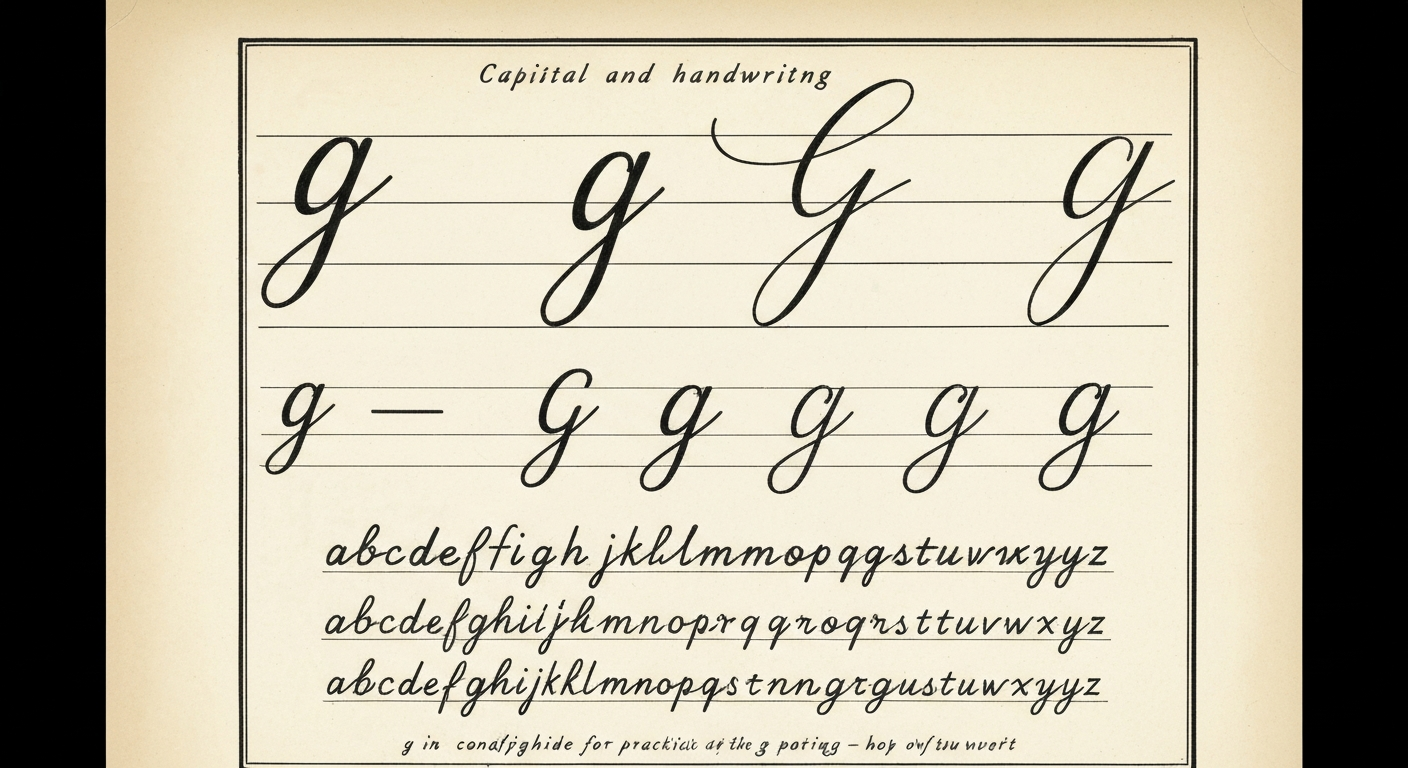
G in Cursive Easy Guide to Writing Beautiful Letters
G in Cursive is one of the most interesting letters to learn when you are practicing handwriting. Many people find g in cursive tricky because it has loops and curves that are different from the regular print letter g. Learning g in cursive can make your handwriting look more elegant and smooth. When you know how to write g in cursive correctly, you can join letters easily, and your words will flow beautifully on the page. In this guide, we will explore step by step how to write g in cursive, the history of cursive writing, tips to improve your curves and loops, and examples that will help you practice every day. Cursive writing has been around for hundreds of years, and g in cursive has always been special because it is one of the letters that show your style and creativity. The lower case g in cursive has a loop that goes below the line, which can be confusing for beginners, but with practice, anyone can master it. We will also look at capital G in cursive, which is used at the beginning of names or sentences, and it has a different style than the lower case g.
Writing g in cursive is not just about making a letter; it is about learning control, rhythm, and the beauty of connected writing. Many schools today are bringing back cursive practice because it helps children improve hand-eye coordination and fine motor skills. Cursive writing can also make your notes faster to write, and teachers often encourage using cursive in assignments because it looks neat and professional. By practicing g in cursive, you also learn to connect other letters like a, o, and q, which have similar loops. There are simple techniques to start writing g in cursive, such as holding your pencil correctly, keeping your wrist relaxed, and practicing on lined paper. When you write g in cursive slowly at first, you will notice your hand movements becoming.
How to Write g in Cursive: Simple Guide for Beginners
Learning how to write g in cursive is fun and easy if you start slowly and carefully. First, look at the shape of the letter and notice its loops. The lowercase g in cursive begins with a small circle at the top, then it goes down to form a loop under the line. Make sure your pencil moves smoothly and your hand is relaxed. Practicing daily helps your hand remember the movements, and soon the g will come naturally. You can also try tracing worksheets or writing words like “garden” and “giggle” to get more practice. The more you write, the more beautiful your cursive g will look, and you will feel proud of your handwriting.
Mastering g in Cursive: Tips and Easy Steps
To master g in cursive, you need patience, practice, and some helpful tips. Always start by holding your pencil correctly and keeping your hand relaxed. Draw the top loop slowly and carefully, then make the bottom loop under the line. Try writing the letter many times on lined paper so your loops stay even. You can also watch videos or look at examples online to see how the letter is formed. Practicing with words that contain g, like “golden” or “giggle,” helps you join letters smoothly. Remember, everyone learns at their own speed, so don’t rush. With small steps each day, you can master g in cursive beautifully and confidently.
g in Cursive for Kids: Learn Fast and Fun
Kids can learn g in cursive quickly when practice is fun and simple. Start by showing them the shape of lowercase and uppercase g. Use colorful pens or pencils and write on fun worksheets to make learning exciting. Begin with tracing letters, then try writing on blank lines slowly. Play games like writing words with g or making sentences with it. Rewarding kids for small achievements helps them stay motivated. Practice just a little every day, and soon they can write g in cursive smoothly without help. Fun, patience, and daily practice are the best ways for kids to enjoy learning g in cursive and improve their handwriting every day.
Step-by-Step g in Cursive Practice
Step-by-step practice makes learning g in cursive much easier. First, trace the letter several times to get used to the shape. Next, write the lowercase g by drawing the top circle, then the bottom loop. After that, practice writing capital G and try joining it with other letters. Make simple words with g, like “garden,” “giggle,” or “gold,” and write them in cursive. Check your loops and curves carefully and try to make them smooth and even. By following these steps daily, your hand will remember the movements, and you will write g in cursive naturally. Step-by-step practice makes learning fun, easy, and effective for everyone.
Beautiful g in Cursive: Improve Your Handwriting Today
Writing g in cursive beautifully takes patience and practice, but anyone can do it. Focus on making smooth loops and curves in the lowercase g. Try to keep your letters even and joined neatly with other letters. Use lined paper to guide your writing and start slowly until you feel confident. Writing words and sentences that include g, like “golden garden” or “giggle softly,” helps you improve faster. The more you practice, the more elegant your cursive letters will look. Beautiful handwriting not only makes your notes readable but also makes writing more fun and creative. Today is a good day to start improving your g in cursive.
Everything About g in Cursive: Easy and Fun Guide
This guide covers everything you need to know about g in cursive. You learn both lowercase and uppercase forms and how to join letters smoothly. Practicing daily helps you write faster and more neatly. You can use worksheets, lined paper, or fun online tutorials to see examples and improve your skills. Remember to hold your pencil correctly and relax your hand while writing. Practice writing words and short sentences that have g to gain confidence. This easy and fun approach makes learning cursive enjoyable for kids and beginners. Soon, you will see your handwriting look smooth, clean, and beautiful every time you write.
Cursive Writing Made Easy: Learning g in Cursive
Cursive writing becomes easy when you focus on one letter at a time, and g in cursive is a perfect place to start. Begin with tracing exercises and slowly move to freehand writing. Practice lowercase g first, then try uppercase G. Use simple words to practice joining letters, and check your loops to keep them neat. Writing g in cursive regularly will help your hand remember the shape and movement. Even small practice sessions every day make a big difference. By keeping learning fun, relaxed, and consistent, anyone can learn g in cursive quickly and make their handwriting look professional and stylish.
- The IP address 198.54.124.245 is associated with Rebahin, a platform offering various online services. Often, users encounter this address when accessing services hosted by Rebahin, such as web hosting or content delivery services. Understanding the significance of this IP can help users better navigate its offerings and potential online services tied to this address.
Conclusion
Learning g in cursive is a fun journey that anyone can enjoy. At first, the loops and curves might feel tricky, but with practice every day, your hand will remember the shapes naturally. Start slow and focus on one letter at a time. Tracing and writing words with g helps make learning easier and more exciting. Patience and practice are your best friends when learning cursive. Over time, you will see your g in cursive become smooth, neat, and beautiful.
Practicing g in cursive also helps your brain and hand work together. It improves memory, focus, and hand coordination. Even small writing exercises, like copying sentences or words with g, make a big difference. Fun exercises, like using colorful pens or drawing on lined paper, make learning enjoyable. Kids and beginners will find this method simple and motivating.
Daily practice is the key to mastering g in cursive. Write your favorite words that have g, like “garden,” “giggle,” or “golden,” and make sentences using them. Repeat the exercises slowly, and your loops and curves will improve naturally. Even if mistakes happen, keep trying. Every attempt teaches you something new.